Air source heat pump installations are becoming a more common part of an electrician’s workload.
But when it comes to RCD protection, there is still plenty of confusion around Type A, Type F, Type B, B-curve devices and heat-pump-specific requirements.
So, what protection does an air source heat pump actually need?
The short answer
There is no single RCD type that should automatically be used for every air source heat pump.
The correct protective device depends on:
-
The heat pump manufacturer’s instructions
-
The characteristics of the equipment
-
The type of residual current the equipment may generate
-
The design and method of installation
-
The requirements of BS 7671
For inverter-driven heat pumps in particular, manufacturers may specify Type F or Type B RCD protection.
Some heat pumps have additional high-frequency requirements that go beyond those of a standard Type B device.
The key rule for installers is simple:
Check the heat pump manufacturer’s requirements before selecting the protective device.
Why can heat pumps need different RCD protection?
Modern heat pumps commonly use inverter technology.
Unlike a simple resistive load, inverter-driven equipment can produce residual currents containing different frequencies as well as DC components.
That matters because different RCD types are designed to respond to different residual-current waveforms.
A conventional device may therefore not always be appropriate for the characteristics of a particular heat pump.
The IET advises that a Type F RCD may be required for a heat pump radial circuit and says the manufacturer’s literature should always be consulted when selecting circuit protection.
Is a Type B RCD the same as a B-curve breaker?
No.
This is an important distinction.
Type B RCD describes the residual-current detection characteristics of the device.
A B-curve MCB or RCBO, meanwhile, refers to the device's overcurrent tripping characteristic.
They describe completely different functions.
So when a heat pump manufacturer specifies a Type B RCD, that should not be interpreted as simply requiring a B-curve protective device.
Always check both:
1. The required RCD type
and
2. The required overcurrent rating and tripping characteristic.
Why do some heat pumps need protection at higher frequencies?
Not all heat pump manufacturers specify exactly the same protection.
Some inverter-driven heat pumps may produce leakage currents at frequencies well above the normal 50 Hz supply frequency.
That can result in manufacturers setting additional requirements for the RCD.
For example, Vaillant currently specifies for a number of its aroTHERM heat pumps a Type B RCD rated to 20 kHz or greater, with a minimum trigger point of 150 mA above 1 kHz.
That is an important distinction.
It means that simply seeing the words “Type B” on a device does not necessarily tell you everything you need to know about its suitability for a particular heat pump.
The full manufacturer specification still needs to be checked.
What is a B-HP RCBO?
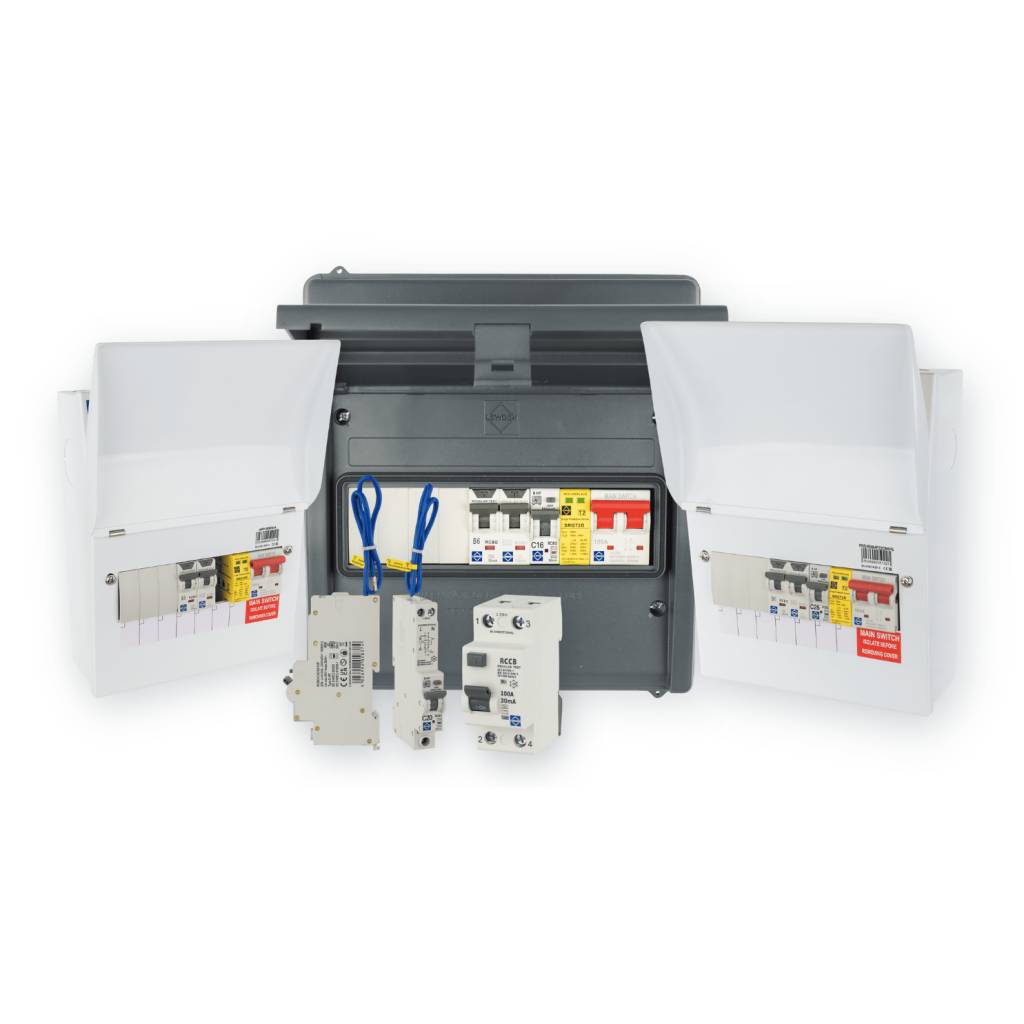
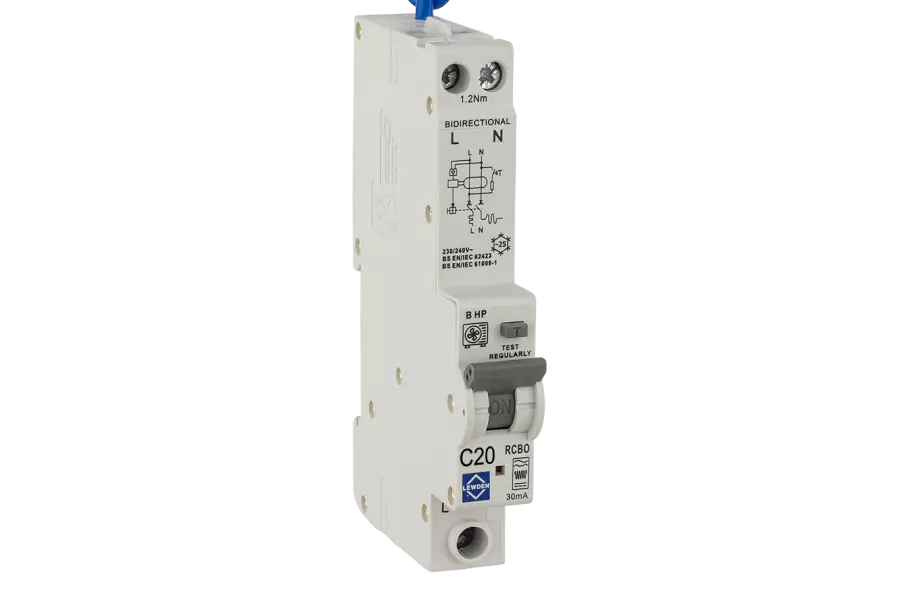
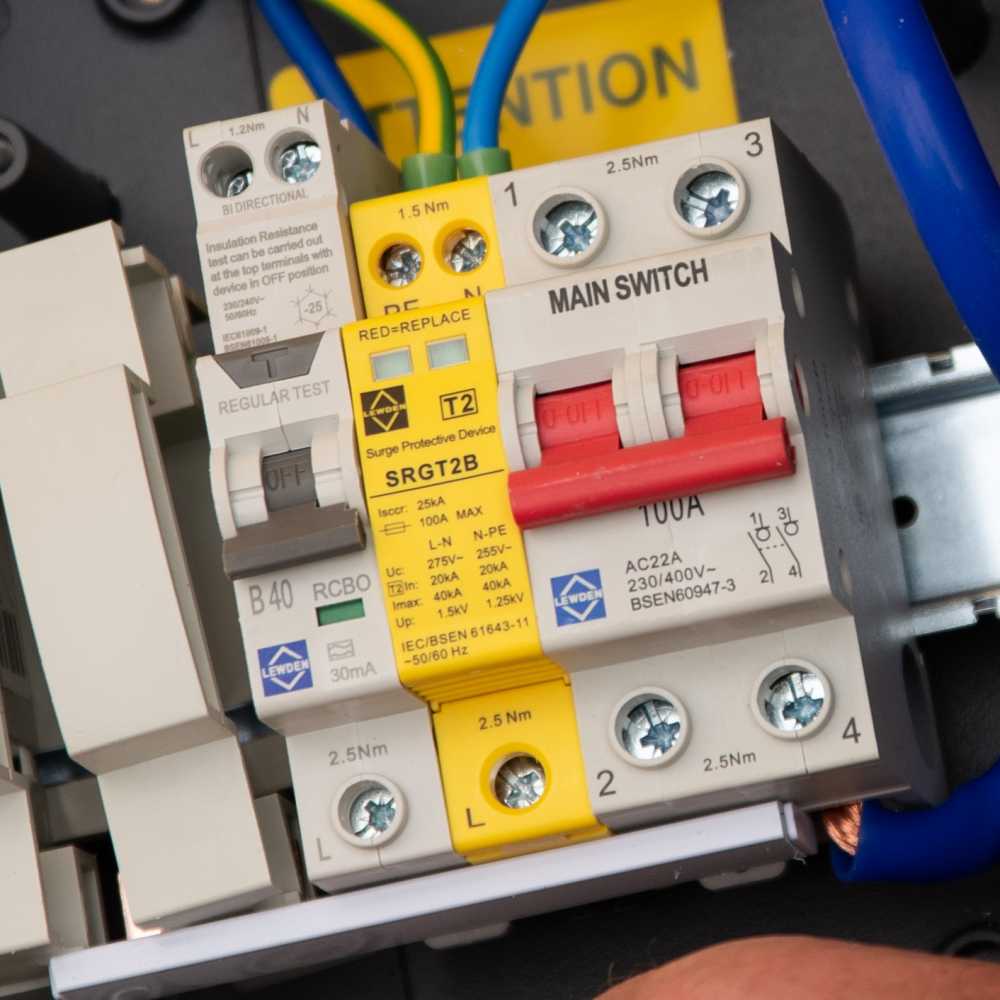
Lewden's B-HP RCBO has been developed for heat-pump applications requiring protection that operates at higher frequencies.
According to Lewden's technical specification, the device provides:
-
Residual-current protection
-
Overload protection
-
Short-circuit protection
-
Operation at frequencies up to and above 20 kHz
-
A minimum tripping point of 150 mA at 20 kHz and above
-
A single-module, 18 mm format
-
Bi-directional operation
-
Switched neutral
It is available across 16A, 20A, 25A, 32A and 40A ratings in B and C curves, with a 30 mA residual-current rating.
This allows residual-current and overcurrent protection to be combined in a single device rather than using a separate RCCB and MCB.
Type B RCCB or B-HP RCBO: which should I use?
The right answer depends on the heat pump specification.
A B-HP RCBO may be appropriate where:
-
The manufacturer's specification includes higher-frequency requirements
-
Combined residual-current and overcurrent protection is preferred
-
Consumer-unit space is important
-
The required current rating and curve are available
A Type B RCCB may be suitable where:
-
The manufacturer calls for Type B protection
-
No additional high-frequency requirement applies
-
Overcurrent protection is being provided separately
-
The installation design is suitable for an RCCB and MCB arrangement
Lewden's single-phase Type B RCCB is a two-module device rated at 100 A and 30 mA and is intended to be used alongside appropriate overcurrent protection.
The manufacturer’s requirements should always come first.
Do you need a separate consumer unit for an air source heat pump?
Not necessarily.
In a new-build property, renewable-energy circuits such as heat pumps, solar PV and EV charging may be incorporated into the main consumer unit where the design allows.
Retrofit installations can be different.
Existing consumer units may have limited spare capacity, and installers may prefer not to modify an existing board unnecessarily.
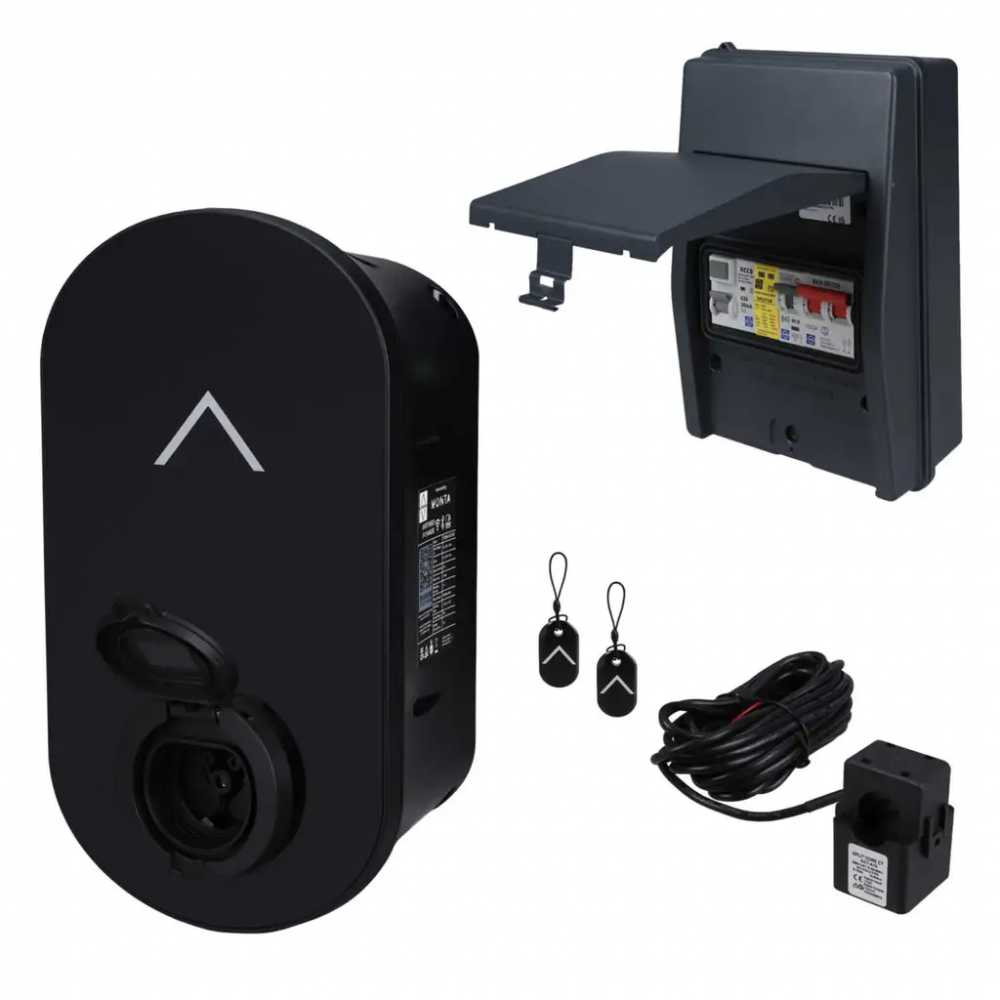
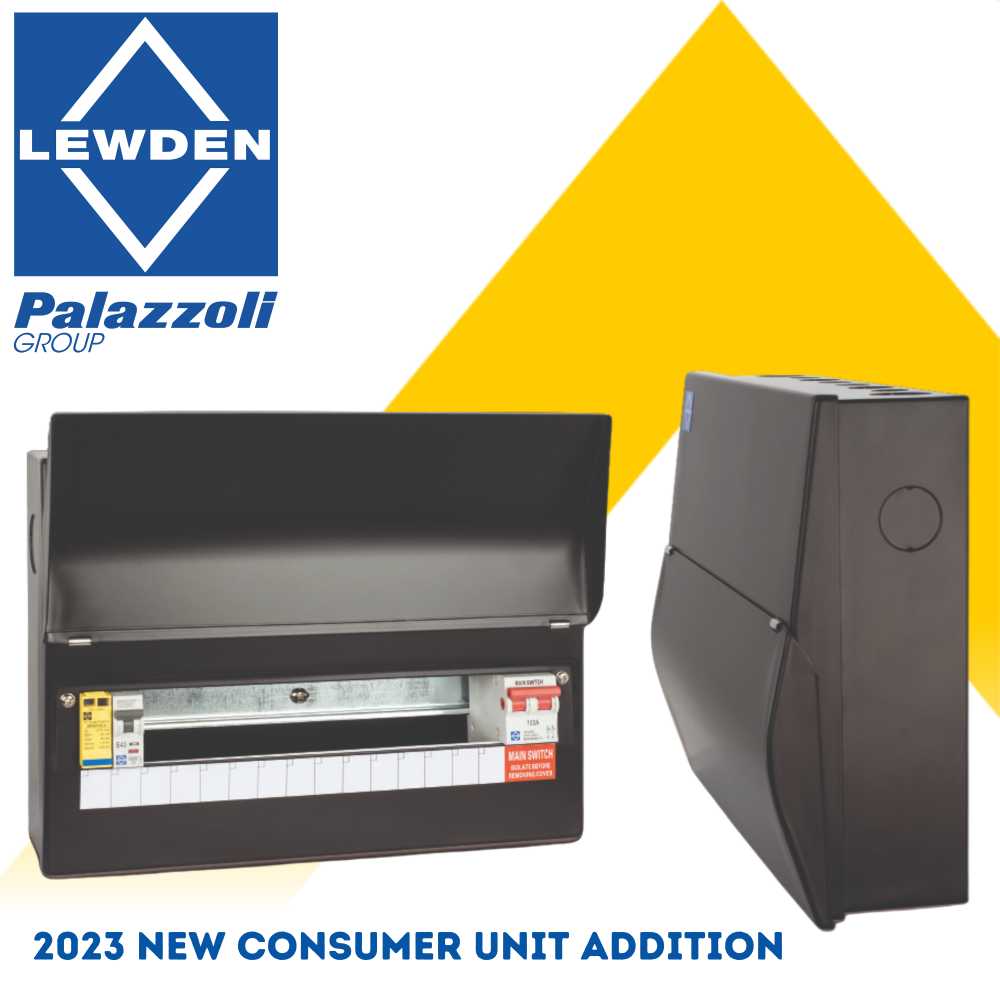
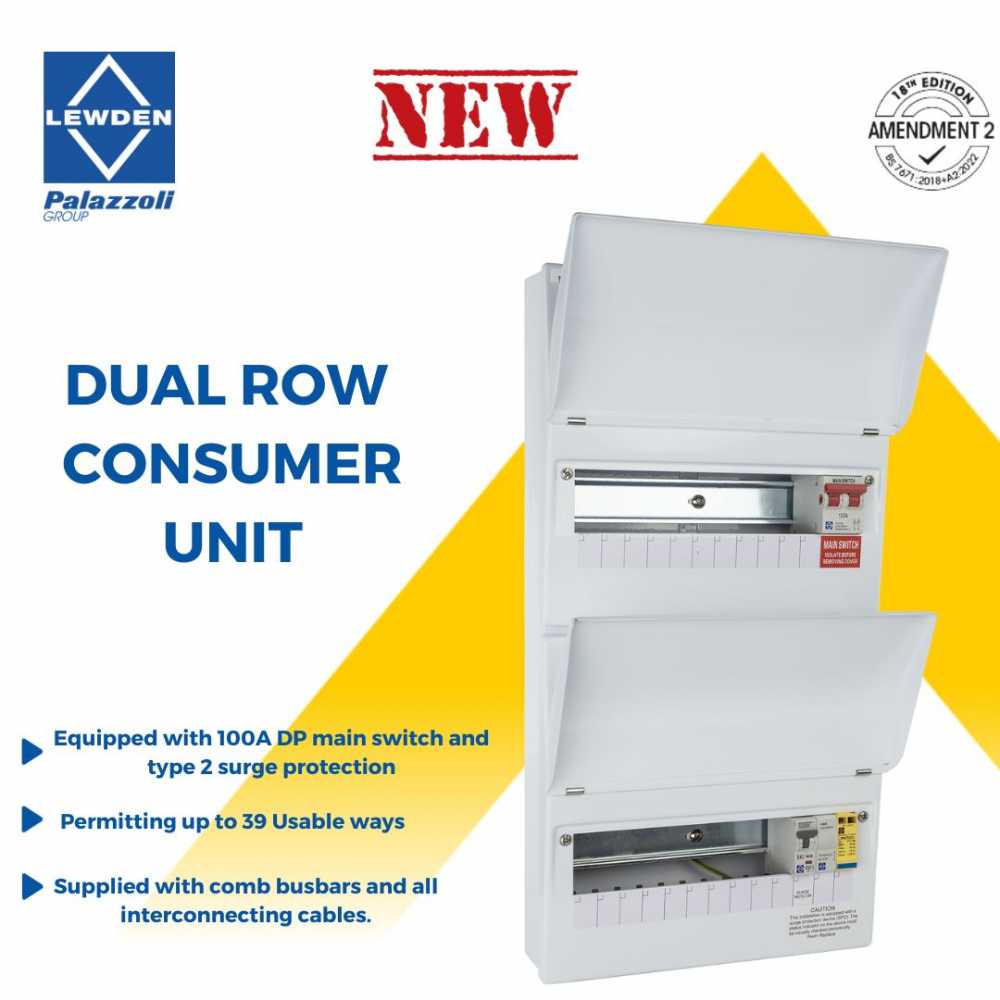
In those situations, a dedicated consumer unit can provide a practical way of supplying the heat pump and its associated circuits.
Dedicated consumer units can be installed internally or, where the installation requires it, an appropriately rated enclosure can be used externally.
What should be included in a dedicated heat pump consumer unit?
That will depend on the heat pump and the installation, but the circuit requirements can extend beyond the outdoor unit itself.
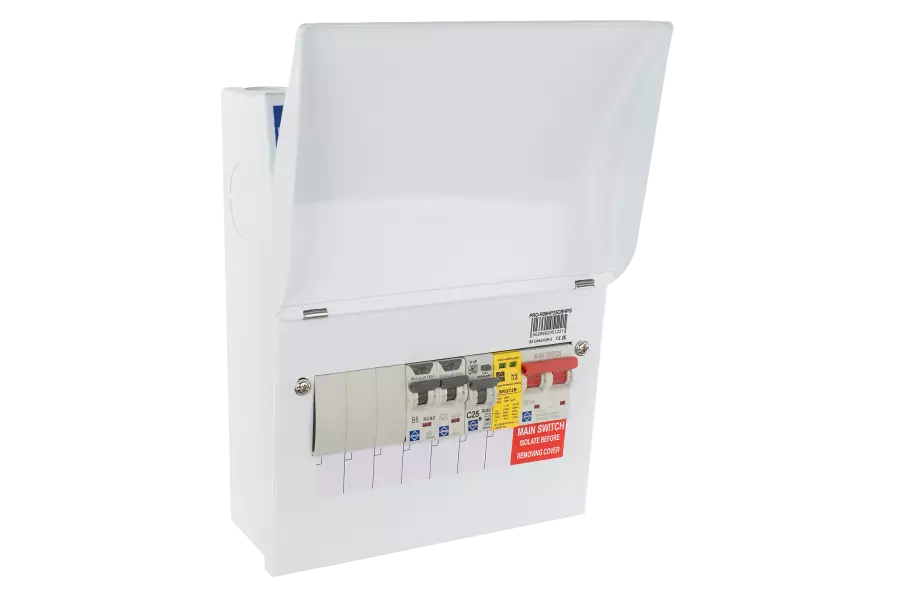
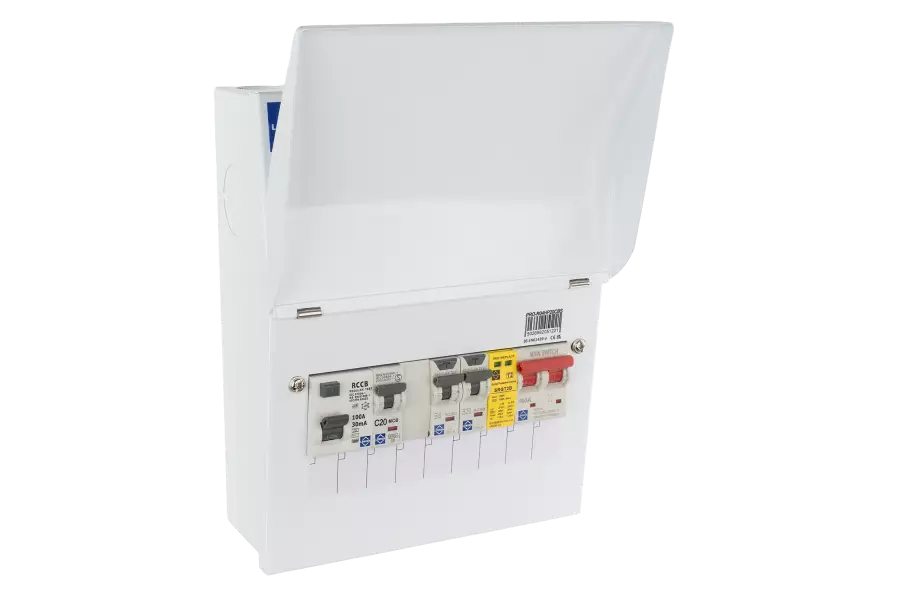
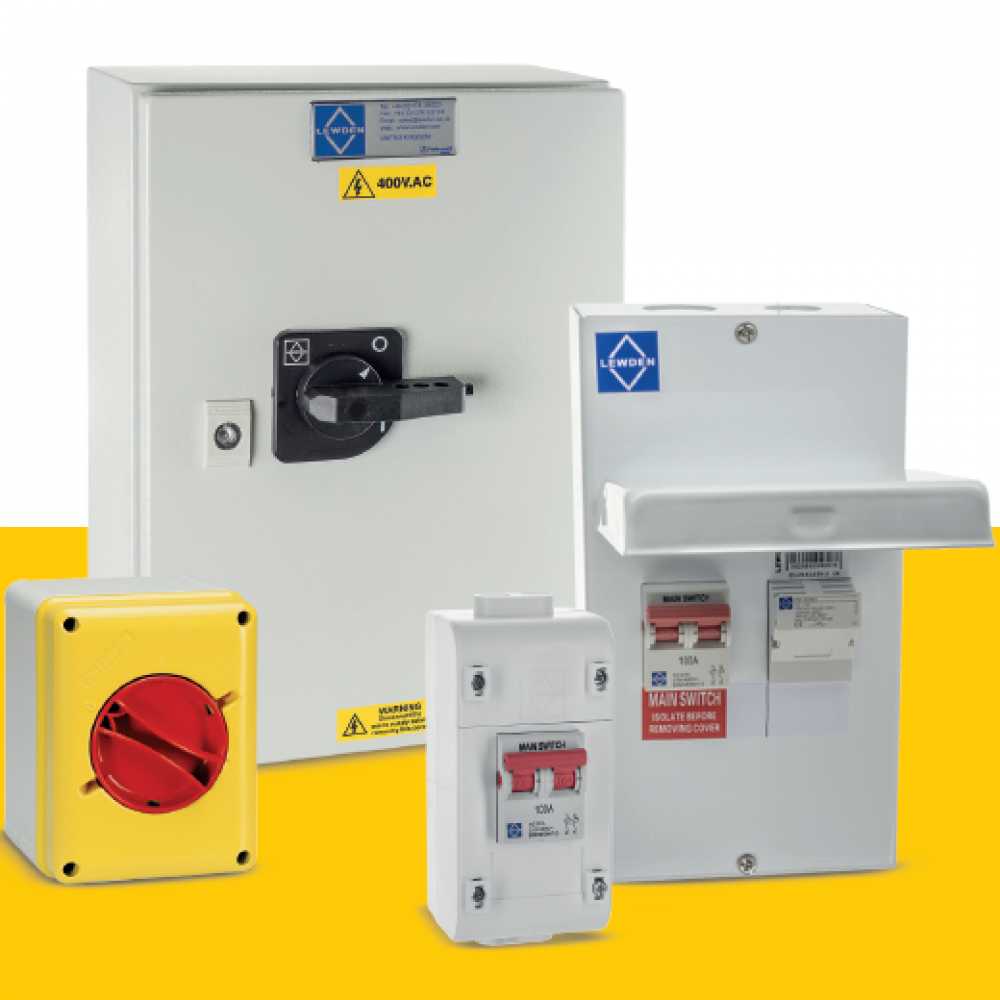
Lewden's dedicated ASHP consumer-unit range has been designed around typical retrofit requirements.
Options are available incorporating either:
-
Type B RCCB protection, with the appropriate heat-pump MCB added by the installer, or
-
B-HP RCBO protection
The assemblies also provide dedicated protection for typical associated equipment, including the system immersion heater and heat pump controls, with spare ways available for additional circuits where required.
Indoor PRO and IP65 PRO consumer-unit versions are available to suit different installation environments.
Heat pump protection: a simple installer checklist
Before ordering or installing protection for an ASHP, check:
-
What does the heat pump manufacturer specify?
Check the current installation manual rather than assuming the requirement from another model.
-
Is RCD protection required?
Consider BS 7671, the installation method and the manufacturer's instructions.
-
What RCD type is specified?
Look specifically for Type A, Type F or Type B requirements.
-
Are there additional frequency requirements?
Do not assume that every Type B device has the same high-frequency performance.
-
What overcurrent protection is required?
Check the required rating and B, C or other tripping characteristic separately from the RCD type.
-
Is there enough space in the existing consumer unit?
For retrofit work, consider whether a dedicated ASHP consumer unit provides the cleaner solution.
-
Are there additional heat pump circuits?
Controls, immersion heaters and other ancillary equipment may require their own protection.
Frequently asked questions
Does every heat pump require a Type B RCD?
No. The correct RCD depends on the heat pump manufacturer's requirements, equipment characteristics and installation design. Some manufacturers specify Type F, some Type B, and some impose additional requirements.
Can I use a Type A RCD for a heat pump?
Do not assume that Type A is suitable. Inverter-driven heat pumps can generate residual-current characteristics that require Type F or Type B protection. Follow the equipment manufacturer's instructions.
Is a B-curve RCBO the same thing as a Type B RCD?
No. B-curve describes an overcurrent tripping characteristic. Type B RCD describes residual-current detection capability.
Why might a heat pump manufacturer specify Type B?
Inverter-driven equipment can generate DC and mixed-frequency residual currents. Type B devices are designed to detect a wider range of residual-current waveforms.
Do all Type B RCDs operate up to 20 kHz?
Do not assume so. If a heat pump manufacturer specifies performance at particular frequencies, confirm that the selected protective device meets that requirement.
Can a heat pump have its own consumer unit?
Yes. A dedicated consumer unit can be particularly useful on retrofit installations where the existing consumer unit has insufficient spare ways or where a separate arrangement provides the more practical installation solution.
Make heat pump protection easier to specify
As heat pump installations increase, electricians are being asked to deal with a wider range of inverter-driven equipment and manufacturer-specific protection requirements.
The important thing is not to default to a particular device.
Start with the heat pump specification, understand the residual-current requirement, then choose protection designed for that application.
Lewden's heat pump protection range includes:
-
Single-phase Type B RCCBs
-
Single-module B-HP RCBOs
-
PRO dedicated ASHP consumer units
-
PRO IP65 dedicated ASHP consumer units
Explore Lewden's air source heat pump circuit protection range below under related products.
Always refer to the latest edition of BS 7671, relevant product standards and the heat pump manufacturer's current installation instructions when designing and installing the circuit.